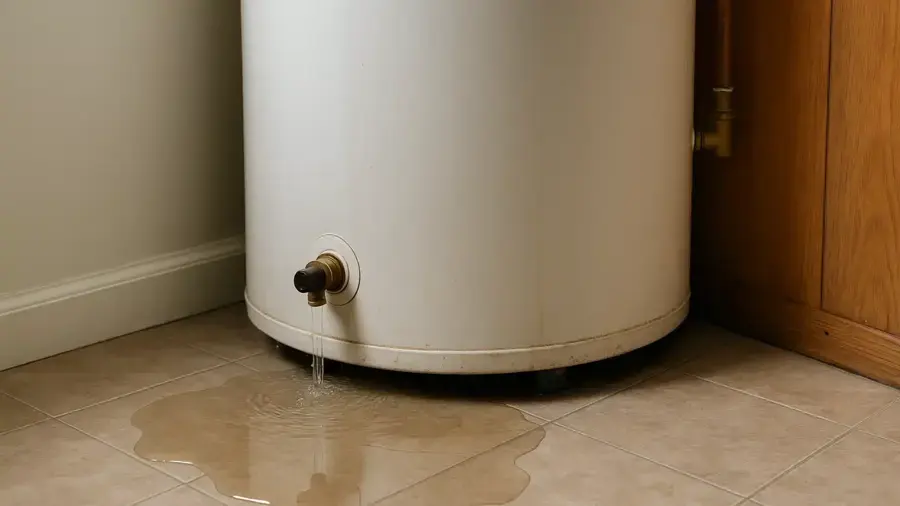
A water heater tank that starts to leak will not stop on its own. In Mason the work splits in two: stopping and removing the water, and then a replacement that goes through a Warren County plumbing permit.
Key takeaways
- A leaking tank is shut off, extracted and dried first; replacing the heater is a separate step.
- The Warren County Health District Plumbing Division checks and inspects plumbing work in Warren County, including remodels.
- The county's permit fee schedule has a separate Water Heater Only permit category.
- The county says plumbing permit fees are doubled when work is done before the permit application is filed.
- Mason's median home build year is 1996, so many water heaters are second or later tanks, and a leak means moisture checks around it.
What happens when the tank lets go
A tank that fails can release a large volume of water across a utility room, garage or finished space. The water spreads along the floor and wicks into the bottom of nearby walls.
The sequence is simple: close the water supply to the tank, turn off the power or gas to it, and start removing the water. Replacing the heater comes after.
Most failures give some warning, such as rust at the base, a damp spot or a puddle that returns after being wiped up. A leak that is small today can become a flood when a seam opens.
- Close the cold water shutoff to the tank.
- Switch off the power to an electric unit or the gas to a gas unit.
- Photograph the tank, the leak and the wet area.
- Start extraction before the water soaks into trim and drywall.
The Warren County plumbing permit
The Warren County Health District Plumbing Division checks and inspects residential and commercial plumbing work in Warren County, including remodels. Mason is in Warren County, so a replacement water heater goes through it.
The county's permit fee schedule has a separate Water Heater Only permit category, so a straight swap has its own place on the schedule.
Why the timing matters
The county says plumbing permit fees are doubled when work is done before the permit application is filed. That makes it worth confirming the permit before the old tank comes out, not after.
- Ask the installer whether the permit has been applied for.
- Keep the permit paperwork with the home records.
- Fee amounts are on the county's own schedule and are not repeated here.
Gas or electric: the shutoff steps differ
A tank water heater runs on gas or on electricity, and the shutoff is different for each. Electric units are turned off at the breaker, while gas units have a valve at the supply pipe and a control on the unit.
If the leak is large or the area is flooded around electrical parts, the safest course is to stay out and shut things down only from a dry, safe spot.
- Electric: switch off the breaker for the water heater.
- Gas: turn the control to off and close the gas valve if it can be reached safely.
- Both: close the cold water supply to the tank.
- If gas is smelled, leave the house and call the gas utility.
Where moisture goes after a tank leak
Greater Cincinnati Water Works supplies water to Mason, and the pressure behind that supply keeps pushing water out of a failed tank until the valve is closed.
The median year a Mason home was built is 1996, so many of the tanks in service are second or later replacements. A leak from one of them can reach flooring, cabinets and the base of walls around it.
- Laminate and engineered flooring can swell and lift at the seams.
- Cabinet kickboards hold water that is not visible from above.
- Wall bottoms behind the tank may stay wet while the floor looks dry.
Closet, garage or utility room: where the tank sits
Where a tank sits changes what gets wet. A tank in a utility room spreads water across the floor, while one in a closet sends water into the walls around it.
A tank in a garage puts water on the concrete, which carries it toward a drain or a low corner. A tank on a finished level can reach carpet, trim and the drywall of the room next to it.
- Closet: wall bottoms and trim soak up water quickly.
- Garage: water spreads on the slab and under stored boxes.
- Finished level: carpet pad and drywall take on water.
- Utility room: cabinets and stored items sit in the flow.
Extraction and drying
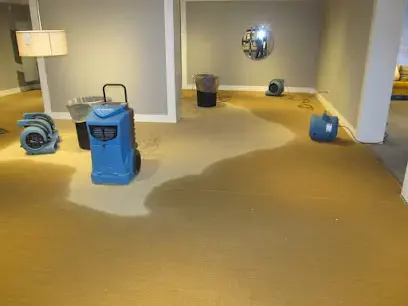
The cleanup follows the same pattern as other clean water leaks. Standing water is removed first, which is the work covered under water extraction.
Moisture meters then map where the water traveled, and air movers and a dehumidifier dry the space until the readings match a dry reference.
If the tank sat on a finished floor, the flooring is checked at the seams and under trim. Water that sits under laminate or engineered boards can raise them, and the boards may need to be lifted so air can reach the subfloor.
- Standing water pulled from the floor.
- Wet flooring and trim lifted where water is trapped.
- Moisture mapped in walls, cabinets and subfloor.
- Equipment run until readings are normal.
Replacing the heater with the cleanup in mind
The replacement is easier when the area has been dried first, since a plumber can then see the connections and the floor under the old unit.
A homeowner dealing with a water heater leak can ask the restoration team and the plumber to coordinate, so the drying equipment and the new tank do not get in each other's way.
The permit and the cleanup are two separate lists. A homeowner who tracks both, with dates, avoids the situation of a new heater in place and a wet wall that was never measured.
- Dry the area before the new tank goes in.
- Check the connections and the shutoff valves while the area is open.
- Confirm the permit before the old tank is removed.
Records and what to keep
A tank failure produces paperwork on two fronts: the loss and the replacement. Photographs of the leak and the wet area help the insurance claim, and the permit file helps the home record.
Keeping both together makes later questions easier to answer, whether they come from an insurer, a buyer or an inspector.
- Photographs of the tank, the leak and the wet area.
- The plumber's invoice and the permit paperwork.
- A note of when the leak was found and when it was stopped.
- The readings sheet from the drying work.
Questions
Does a water heater replacement in Mason need a permit?
The Warren County Health District Plumbing Division checks and inspects plumbing work in Warren County, and its fee schedule has a separate Water Heater Only permit category.
What happens if work starts before the permit is filed?
The county says plumbing permit fees are doubled when work is done before the permit application is filed.
Should the leak be cleaned up before the new heater goes in?
Yes, in most cases. Removing the water and drying the area first lets a plumber see the connections and the floor beneath the old unit.
Who supplies water to Mason homes?
Greater Cincinnati Water Works supplies water to Mason residential and business customers.
How is the leak area dried?
Water is extracted, moisture meters map the damp areas, and air movers and a dehumidifier run until readings match a dry reference.