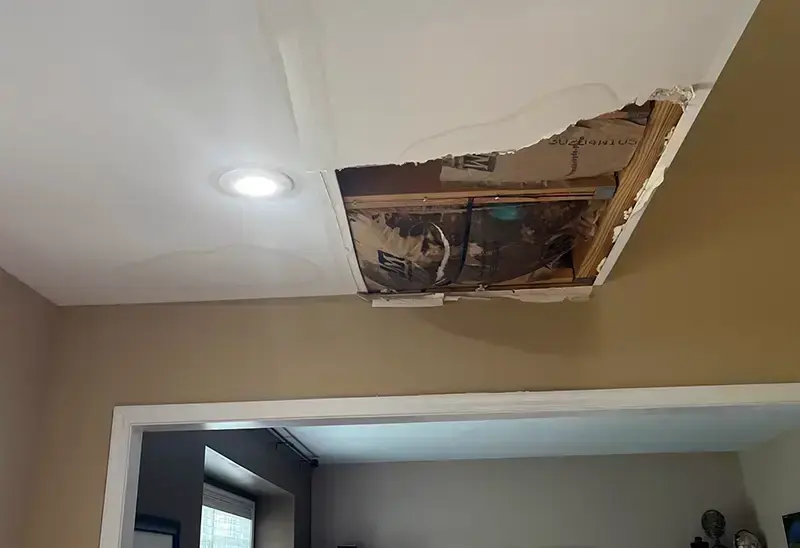
A brown stain spreads across a ceiling in a condominium or apartment, and the first question is where the water came from. In multi unit buildings in Montgomery, the answer is often the unit above, not the roof.
Key takeaways
- In a building with units stacked above one another, a ceiling leak can start in an upstairs bath, kitchen or laundry, not on the roof.
- Montgomery Quarter has 148 luxury apartments and 48 condominiums, and the Vintage Club Wicks condominium buildings first opened in 2020.
- The pattern of the stain, timing and weather help separate a roof leak from a leak above.
- Wet ceiling drywall is opened so the cavity above it can be dried, not just painted over.
- An owner, a tenant and an association each need different information, so a written record helps every one of them.
Where Montgomery's multi unit homes are
Montgomery Quarter is a mixed use development at the southern end of the city with a boutique hotel, retail and restaurants, office space, 148 luxury apartments and 48 condominiums.
Vintage Club is a planned development along Montgomery Road north of Interstate 275 whose Wicks condominium buildings first opened in 2020. Twin Lakes, an independent living community, has added new flats buildings, and The Villas of Montgomery is a newer villa development along Montgomery Road.
These buildings differ in age and in layout, so no single rule fits them all. What they share is that floors and ceilings are shared surfaces, and water moves between them.
Roof leak or leak from above?
The place and timing of a stain are the first clues. A roof leak shows after rain or snowmelt, while a leak from a unit above can appear on a dry day.
Signs of a roof leak
A roof leak usually shows after weather and may stain the top floor only. It follows storms and may stop when the rain does.
- The stain appears after rain or melting snow.
- It is on the top floor ceiling or along an exterior wall.
- It dries between storms.
Signs of a leak from the unit above
A leak from above is tied to water use, not weather. It can show on any floor below the source and may continue in dry weather.
- The stain appears after a shower, a wash cycle or a dishwasher run above.
- It sits below a bathroom, kitchen or laundry area.
- It keeps growing even when the weather is dry.
What an owner or tenant does first
The goal is to stop more water from arriving and to document the loss.
- Place a bucket and move furniture and electronics out from under the stain.
- Do not poke a bulging ceiling without a bucket in place, as it can release a lot of water at once.
- Photograph the stain with a date and note when it started.
- Tell the owner above, or the property manager, as soon as the source is suspected.
- Contact the condominium association or landlord, depending on who is responsible for the building.
Owner, association and tenant: who needs to know what
In a condominium, the association may be responsible for common elements, while an owner is responsible for what lies inside the unit. In a rental, the landlord or manager is the contact.
This post does not decide who pays. It points out that each party needs a written record: when the stain appeared, what was done and who was told.
A shared record helps when responsibility is unclear at the start. The facts of when the stain appeared and what happened next tend to settle many questions before they become disputes.
- Owners keep photographs, notes and any messages sent.
- Associations log reports and any repairs to common pipes.
- Tenants keep written notices to the landlord.
How water travels from a bath above to a ceiling below
Water follows the easiest path. A leak from a tub, a shower pan or a supply connection can run along a pipe, drop through a hole in the floor and spread across the back of the ceiling below before any stain shows.
That is why the wet spot is often not directly under the source. It can sit several feet away, and a second stain may appear in a room that seems unrelated.
- Look for stains below bathrooms, kitchens and laundry areas.
- Check walls on the same side as the plumbing.
- Note whether the stain has moved or spread.
Appliances above the ceiling
Washers, dishwashers and refrigerator supply connections are common sources in a unit above. A hose that slips off, a pan that overflows or a seal that fails can release water for as long as it goes unnoticed.
In a building where many households share floors and ceilings, the water often lands on a neighbor first, so quick notice between neighbors matters.
- Ask the unit above to shut off the water to the appliance.
- Leave a written note or message with the date and the stain location.
- Keep a copy for the association or landlord.
How a wet ceiling is opened and dried
Paint hides a wet ceiling, but it does not dry it. Drywall that holds water can sag, grow stains and leave insulation above it wet.
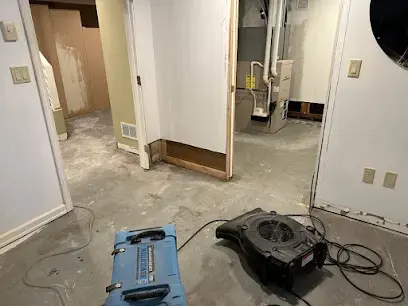
A moisture meter shows how far the water has spread, and the drywall is opened where the readings are high. Opening gives air movers a direct path to the cavity, and a dehumidifier removes the moisture from the room.
Ceilings in multi unit buildings can also hide wiring, ducts and sprinkler pipes. The crew checks what is above the drywall before cutting, and keeps the opening as small as the readings allow.
- Moisture meters map the wet area.
- Wet drywall and insulation are removed.
- The cavity is dried with air movers and a dehumidifier.
- Repairs are made only after readings match a dry reference.
Finding the source and drying together
Drying a ceiling without finding the source simply restarts the leak. When the water came from an upstairs fixture or appliance, appliance leak water damage work also covers the floors and cabinets in the unit above.
When the stain is on the ceiling itself, ceiling leak water damage is the part that follows the water down through the ceiling and into the cavity. Plumbing permits for any pipe repairs go through Hamilton County Public Health, and the Montgomery hub lists the other services.
- Trace the water back to the source.
- Dry the ceiling and the floor above if both are wet.
- Repair the fixture or pipe, with a plumbing permit where required.
Questions
How can a condo owner tell a roof leak from a leak above?
A roof leak follows rain or snowmelt and tends to show on the top floor, while a leak from above follows water use and can continue on a dry day.
Does a wet ceiling need to be opened?
Usually yes. Wet drywall and insulation hold water, so the ceiling is opened and the cavity is dried, not just painted.
Who is responsible for a leak from the unit above?
That depends on the building, the source and the agreements involved. A written record helps every party, and the association or landlord is the first contact.
What multi unit housing is in Montgomery?
Montgomery Quarter has 148 luxury apartments and 48 condominiums, and the Vintage Club Wicks condominium buildings first opened in 2020.
Who issues plumbing permits in Montgomery?
Plumbing permits are issued by Hamilton County Public Health, while National Inspection Corporation handles building permit checks and inspections for the city.