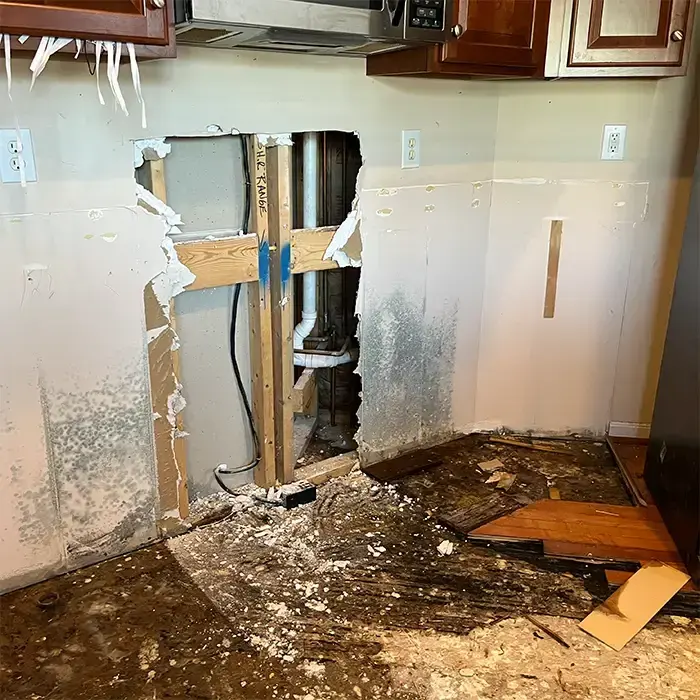
Not every pipe failure is a burst. A pinhole in an aging copper pipe can spray or weep inside a wall cavity for a long time, and the first sign may be a damp spot on drywall, not a gushing floor.
Key takeaways
- West Chester has mostly suburban homes from the 1970s to the 2000s, and aging copper is a known source of pinhole leaks.
- A pinhole leak is small but constant, so it can wet insulation, drywall and framing before a stain shows.
- Brittle CPVC near water heaters is another failure point in the same era of homes.
- Moisture meters and a thermal camera map the wet cavity before any wall is opened.
- Drying is complete when readings match a dry reference, and the leaking pipe is repaired by a plumber.
What a pinhole leak is
Copper supply pipe does not last forever. Over the years the inside of the wall of the pipe can wear thin in spots, and a pinhole opens where the metal gives way.
Water under pressure then escapes in a fine spray or a slow weep. Behind a wall, the spray can wet insulation and drywall from the inside out.
Water chemistry, age and the pressure in the system all play a part in how copper wears. No single cause explains every pinhole, which is why one leak is often followed by another in the same run of pipe.
- Small hole, constant pressure.
- Water travels along framing and pipes before it shows.
- The leak can run for a long time without a visible stain.
Why pinhole leaks are found late
A pinhole leak does not announce itself. It is small, so the first damp spot may be tiny, and the water often stays inside the cavity where it is out of sight.
Drywall can absorb a surprising amount before it shows a stain, and insulation holds water against the studs. By the time paint bubbles, the framing may already be wet.
- The hole is small, so the drip is slow.
- Insulation and drywall hide the water.
- The leak may run only when the pipe is under pressure.
Why West Chester homes are a fit for it
Much of West Chester is suburban housing from the 1970s to the 2000s. The local plumbing picture includes aging copper pinholes, brittle CPVC near heaters, braided supply hoses and tank water heaters that are on their second or third generation.
Older homes in Olde West Chester and Port Union add more age to the mix, while Beckett Ridge and Wetherington homes have their own plumbing that deserves a look as it ages.
Braided hoses and brittle CPVC: other small failures
Copper is not the only part of a home's plumbing that fails slowly. Braided supply hoses can burst at the fitting, and CPVC near a water heater can turn brittle and crack.
Water heaters themselves are often on their second or third tank in homes from the 1970s to the 2000s, and a leak at a fitting can wet a wall the same way a pinhole does.
- Check hoses behind toilets, sinks and washers for bulges or rust.
- Look at CPVC near the water heater for cracks or discoloration.
- Replace old supply hoses before they fail.
Signs of a leak inside a wall
A hidden leak leaves clues before it leaves a puddle.
- Paint that bubbles or peels on an interior wall.
- A musty smell near a wall, a closet or a bath.
- A warm or damp spot on drywall.
- Baseboards that swell or pull away.
- A water meter that moves when every fixture is off.
- The sound of a faint hiss or drip inside a wall.
What to do first
When a pinhole leak is suspected, the first job is to stop the water.
- Shut off the main water supply.
- Turn off power to a wet area if outlets or switches are nearby.
- Photograph the damp spot and note when it was first seen.
- Call a plumber for the pipe and a restoration team for the wall.
Mapping the wet cavity
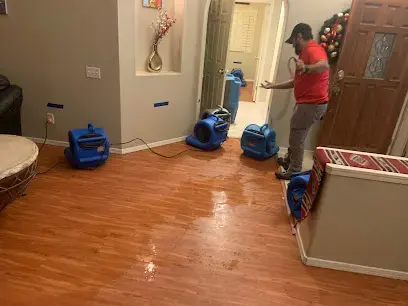
A moisture meter shows how far the water traveled, and a thermal camera can show wet areas by temperature. The map shows how much of the wall must be opened and avoids cutting more than needed.
The work belongs to burst pipe water damage in the sense that a pipe has failed, even if the failure is small.
Mapping also protects the finished surfaces. A wall opened only where it is wet leaves more paint and trim intact, and the repair costs less than a wall opened from end to end.
- Meter readings on drywall, studs and baseboard.
- A thermal camera scan of the wall and ceiling below.
- A sketch of the wet area for the repair.
Opening and drying the wall
Wet insulation is removed because it holds water against the framing. Drywall is cut out where the readings are high, and the cavity is opened so air movers can reach it.
Structural drying then continues until the studs and sheathing match a dry reference, which prevents swelling and later stains.
The leaking pipe should be repaired before the wall is closed. A plumber can also check nearby copper for the same wear, since a second pinhole in the same run is not unusual.
- Insulation out, framing exposed.
- Air movers and a dehumidifier run on the cavity.
- Readings taken daily until normal.
If the leak has run for a long time
A leak that has run for a long time may have soaked more than one room. The wall below, the ceiling underneath and the floor beside it can all be wet.
Where water has pooled, water extraction comes first, followed by drying and then repairs to the wall.
- Check the ceiling under a wet wall.
- Check the floor and baseboard beside it.
- Have the pipe repaired before the wall is closed.
Records for the insurer and for the next owner
A hidden leak is a loss that should be on record. Photographs of the wall, the meter readings and the plumber's report show what happened and what was done.
These records are useful when the home is sold or when a claim is filed, and they show that the wall was dried before it was closed.
- Photographs of the damp area and the opened wall.
- The plumber's note on the failed pipe.
- Daily moisture readings from the drying work.
Questions
What is a pinhole leak?
It is a tiny hole that opens in an aging copper pipe, letting water spray or weep inside a wall.
How can a hidden leak be found?
Moisture meters and a thermal camera map the wet area, and a water meter that moves with all fixtures off points to a leak.
Do West Chester homes have copper pipes?
Aging copper pinholes are one of the plumbing failure modes of the 1970s to 2000s homes common in West Chester, along with brittle CPVC near heaters.
Does the wall always need to be opened?
Not always. The meter readings show where the water is, and the wall is opened only where the readings are high.
Who repairs the pipe?
A plumber repairs the pipe, while the restoration team removes wet materials and dries the structure.