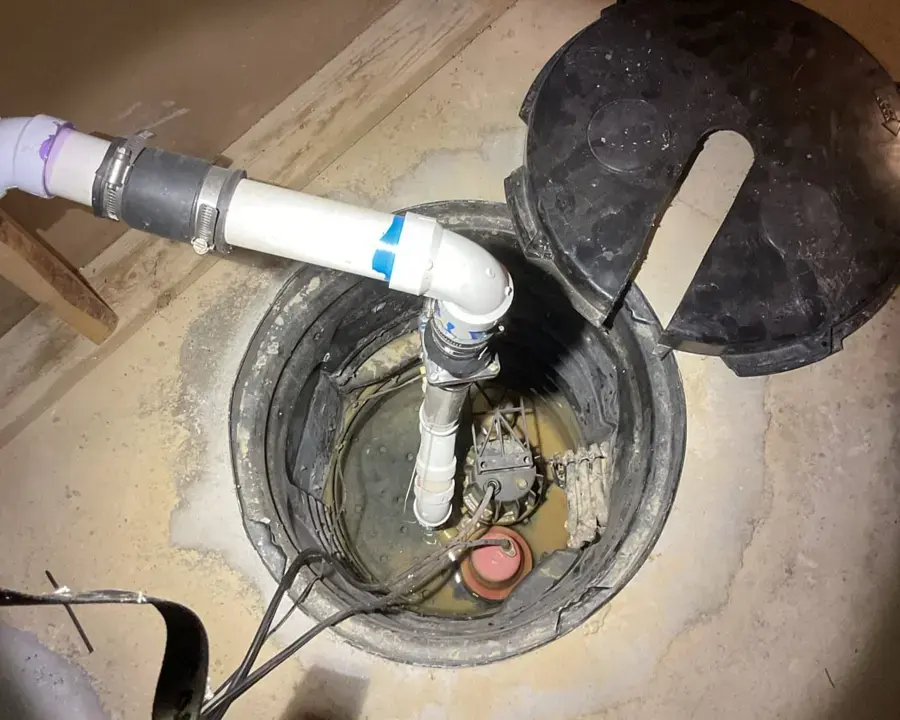
A thunderstorm rolls through, the lights go out and the sump pump goes quiet along with them. In West Chester, where full basements and sump pits come with much of the housing stock, that silence can be the start of a flooded lower level.
Key takeaways
- A sump pump on house power stops when a storm takes the electricity out, even when the pump itself is in good working order.
- Dense glacial clay drains slowly, so groundwater around a West Chester foundation has few places to go once the pit fills.
- Standing water in a basement with the power in doubt is an electrical hazard, so the first move is staying out of it.
- The longer water sits against carpet pad and drywall, the more of both has to come out.
- Cleanup is finished when moisture readings on the slab and wall bottoms return to normal, not when the surface looks dry.
Why a storm outage stops the sump pump
A sump pit sits in the basement floor and collects groundwater that would otherwise rise against the slab. A pump inside it switches on when the water reaches a set height and sends the water outside.
Most pumps run on ordinary house power. When a storm knocks out the electricity, the pump has nothing to run on, and the pit keeps filling at the same moment the ground is most saturated.
A float switch tells the pump when to run, and a power loss cuts the switch off as well. Nothing in the pit changes, but nothing moves the water out either.
This is the part many homeowners miss. A pump that has worked through years of rain can still fail the one night the grid goes down.
- The pump can be new and still be useless during an outage.
- Storms bring the heaviest ground water and the most power loss together.
- A pit that overflows spreads water across the floor toward the finished areas, not toward a drain.
Why West Chester ground holds water
The local ground is dense glacial clay, and clay drains slowly. After a spring thunderstorm the soil around a foundation stays saturated far longer than sandy ground would.
West Chester sits in the upper Mill Creek watershed and the Great Miami River valley, so groundwater is part of the setting rather than a rare event.
Full basements, many of them finished
Much of the housing is suburban construction from the 1970s to the 2000s, and full basements are common, many of them finished with carpet, drywall and storage.
A finished basement turns a short pit overflow into a larger loss, because carpet pad and drywall act like sponges.
Split levels add a second wet space
Split level homes add crawl spaces to the picture. Water that leaves the pit area can also move toward those lower spaces, where it is easy to miss.
Seepage at the wall or a full pit: two different problems
A basement can take in water in two ways during a storm. Seepage shows as dampness or a thin sheet of water along the base of the walls, while a pit overflow sends water across the floor from one spot.
In clay ground, both can happen in the same storm. The pit fills because the pump has stopped, and the saturated soil presses water through the joint where the wall meets the slab.
- Seepage tends to leave a dark band along the bottom of the wall.
- A pit overflow leaves the wettest area near the pit and a path across the floor.
- Either way, the carpet and pad nearest the water are the first to soak through.
The first steps when the pit fills
The order matters more than speed. Safety comes first, then the water, then the belongings.
- Stay out of the basement if water is near outlets, the panel or plugged in equipment, and treat the power as live until it is confirmed off.
- Shut off power to the basement at the main panel only if the panel is dry and reachable from a dry spot; otherwise wait for the utility or an electrician.
- Move small valuables and papers upward from a dry vantage, such as the stairs.
- Photograph the water level, the pit and the damaged items for later.
- Call a restoration team to start sump pump failure cleanup while the storm is still in the area, since extraction can begin before the power returns.
What to leave alone until the power is safe
Several habits make a flooded basement worse or more dangerous.
- Walking through standing water to reach the panel.
- Running a household vacuum on wet carpet, which is both unsafe and ineffective.
- Opening a floor drain to push water down it, which can send storm water the other way.
- Waiting for the carpet to dry on its own, since the pad underneath holds water for days.
How the cleanup runs
A basement that took in storm water is handled in a fixed order, and each stage depends on the one before it.
Extraction first
Pumps and wet vacuums remove the standing water from the floor and the pit area. This is the same work described under basement flooding cleanup, and it comes before anything else because standing water keeps driving moisture deeper.
Wet materials out
Carpet pad that has absorbed storm water rarely recovers and is removed. Drywall wicks water upward, so the bottom of the wall may be cut away with a flood cut at the height the moisture reached.
Because groundwater and storm runoff carry soil and bacteria, wet porous materials are treated as contaminated, not as clean water.
Drying to readings
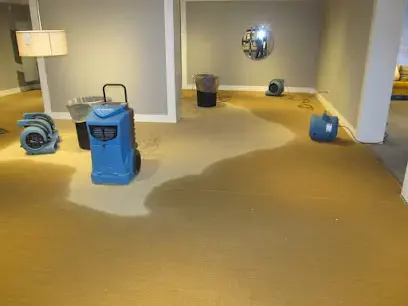
Air movers and dehumidifiers run on the slab and framing while meters track the readings each day. The job ends when the numbers match a dry reference, not when the surface feels dry.
- Moisture readings on the wall bottoms and the slab, taken daily.
- Equipment is moved as the wet area shrinks.
- Finished materials are replaced only after the readings are normal.
After the water: pump, pit and the next storm
Once the basement is dry, the pit and pump deserve a look, since the same storm pattern will return. A homeowner can ask a plumber about a battery backup or a water powered backup pump, so an outage does not end the pump's work.
Testing the pump by pouring water into the pit before the storm season is a simple habit. So is checking that the outlet pipe discharges well away from the foundation, because water that returns to the same clay does not drain.
Where the pit failed to keep up even with power, a larger loss may call for water extraction beyond the basement, since water can travel under walls into other rooms.
A plumber or a sump pump installer can explain which backup suits a house, and a restoration team can point out where the water went during the loss so the plan matches the real path.
- Test the pump with a bucket of water before each storm season.
- Keep the discharge pipe clear and pointed away from the house.
- Raise stored items off the floor, even in the finished space.
Documenting the loss for the insurer
A basement loss goes more smoothly when the record is clear. Photographs and notes taken before anything is moved show what the water reached and when.
A homeowner can also ask the insurer how sump pump and water backup losses are handled, because policies differ on that point and the answer affects what gets repaired.
- Photograph the pit, the water level and the damaged items before cleanup begins.
- Write down the time the power went out and when water was first seen.
- Keep a list of finished materials that were wet, such as carpet, trim and drywall.
- Save receipts for any equipment, storage or temporary housing.
Questions
Does a sump pump work during a power outage?
Only if it has a backup. A pump on house power stops when the electricity does, so a storm outage and a filling pit can happen together.
Is it safe to go into a flooded basement after a storm?
Not while the power status is unknown. Standing water near outlets or the panel is an electrical hazard, so the basement stays off limits until the power is confirmed off or an electrician clears it.
Why does clay soil make basement flooding worse in West Chester?
Dense glacial clay drains slowly, so water stays in the ground against the foundation longer after a storm and is slower to move away from the pit.
How soon should the water be removed from a finished basement?
As soon as it is safe to start. Carpet pad and the bottom of the drywall absorb water, and the longer they sit wet, the more has to be torn out.
Does a basement need drying after the water is pumped out?
Yes. Pumping removes the standing water, but the slab, wall bottoms and framing still hold moisture, and drying continues until readings match a dry reference.