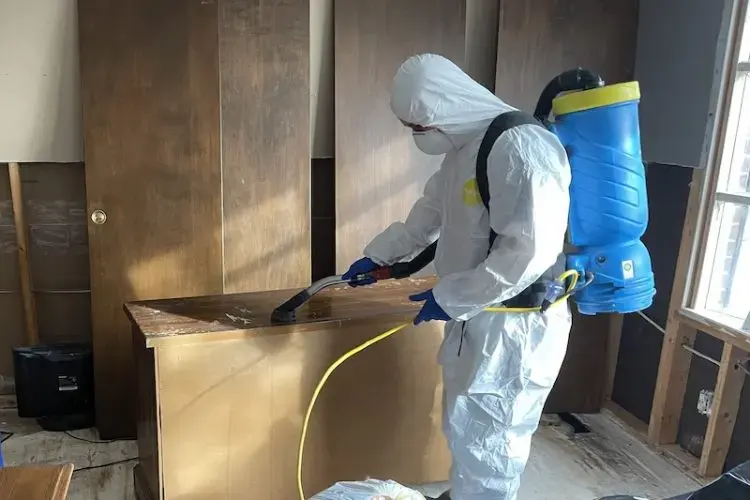
When sewage backs up through a floor drain or toilet in Blue Ash, two clocks start. One is the contamination spreading into carpet, drywall and the air, and the other is the window for telling the Metropolitan Sewer District.
Key takeaways
- MSD handles sanitary sewers in Blue Ash and takes backup reports around the clock.
- MSD asks for a backup to be reported within 48 hours of discovery to be considered for its sewer backup program.
- According to MSD, a backup from a collapsed or root damaged pipe, grease or flushable wipes is an issue for the individual property, not for MSD.
- Part of the Greater Cincinnati sewer system is a combined sewer that carries sewage and stormwater in the same pipes.
- Sewage is contaminated water, so porous materials it touched are removed and hard surfaces are treated, not simply dried.
Who handles sewers in Blue Ash
The Metropolitan Sewer District of Greater Cincinnati, known as MSD, handles sanitary sewers in Blue Ash. MSD is a City of Cincinnati department, and the Hamilton County commissioners oversee its budget and customer rates.
Water service comes from Greater Cincinnati Water Works, which is a separate utility. A sewage backup is an MSD matter, while a supply problem is not.
Knowing the split helps a homeowner make the right calls in the right order. MSD hears about the backup, a plumber finds a cause inside the property and a sewage backup cleanup team handles the contaminated materials.
The 48 hour report window
MSD takes sewer backup reports around the clock. It asks for a backup to be reported within 48 hours of discovery to be considered for its sewer backup program.
That makes the report an early task, not something to leave until the cleanup is finished. A homeowner can report the backup and arrange cleanup at the same time.
- Note the date and time the backup was discovered.
- Report it to MSD promptly, using the number on its website.
- Photograph the drain, the water and the affected rooms before cleanup starts.
- Keep a written record of whom was told and when.
What MSD investigates, and what it does not
MSD investigates rain related backups to see whether sewer capacity caused them. Overland flooding, where water runs across the ground and enters a building, is not MSD's responsibility.
MSD also says a backup from a collapsed or root damaged pipe, grease or flushable wipes is an issue for the individual property for which MSD has no legal liability. That is MSD's own statement, and it is why a homeowner often needs a plumber to find the cause.
- A rain related backup may be tied to sewer capacity.
- A backup from roots, grease or wipes is treated as a property issue.
- Water coming across the ground is overland flooding.
A combined sewer changes how rain behaves
Part of the Greater Cincinnati sewer system is a combined sewer that carries sewage and stormwater in the same pipes. In heavy rain, that shared flow can push back toward the lowest drains in a building, which is why backups often follow a storm.
This post does not say which pipe in any home belongs to which party. That depends on the property and the utility, and a plumber or MSD can speak to it.
What a homeowner should avoid after a backup
Sewage is more than an unpleasant mess. It carries bacteria, and some well meant steps spread it.
- Do not run a household vacuum on wet carpet.
- Do not flush toilets or run the washer while the drain is backing up, because that sends more water into the same pipe.
- Do not walk through the area barefoot or let children and pets in.
- Do not wait for carpet and pad to dry on their own, because they stay contaminated.
- Do not mix cleaning chemicals in an attempt to disinfect the floor.
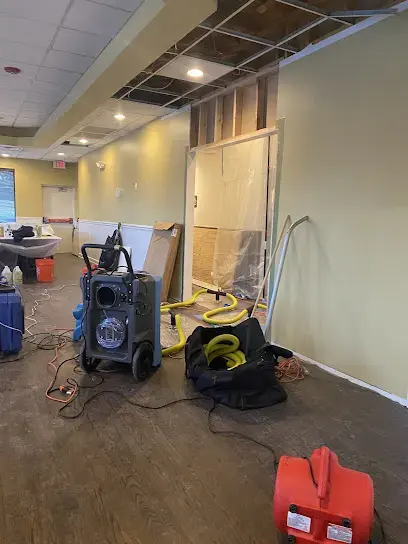
How the cleanup treats sewage
Sewage is contaminated water carrying bacteria. The response is different from a clean water leak, and the work starts with protection for the crew and for the rest of the house.
The goal is to leave nothing contaminated behind. A surface that looks clean can still hold bacteria in pores and seams, so treatment follows removal and is checked before drying finishes.
Containment and removal
The affected area is sealed off from the rest of the building. Liquid is extracted, and porous materials such as carpet, pad, insulation and lower drywall are cut out and bagged.
Cleaning and drying
Hard surfaces such as the concrete slab are washed and treated, and the space is then dried with air movers and dehumidifiers. The steps are laid out under sewage backup cleanup.
- Protective gear for the crew.
- Contaminated materials removed, not dried in place.
- Surfaces treated and then dried to readings.
Heavy rain, overland flooding and the report
MSD investigates rain related backups to see whether sewer capacity caused them. That makes the date of the storm and the time of discovery part of the record.
Water that arrives from the ground surface is a different matter, because overland flooding is not MSD's responsibility. A homeowner who sees both kinds of water at once should say so when reporting, and the restoration team can separate the sources while it works.
- Note whether water came up through a drain or in through a door or window.
- Record the time of the last heavy rain.
- Photograph the drain, the water and any debris.
Basements, permits and the repair afterward
A backup that reaches a lower level calls for the same extraction and drying described under basement flooding cleanup, plus the contamination steps above. Plumbing permits for Blue Ash projects are handled through Hamilton County, while building and zoning permits come from the city's Community Development office.
Repairing a failed pipe or fitting is plumbing work and may need a permit, so a homeowner should ask before the work starts. The restoration team handles the cleanup, and a plumber handles the pipe.
A finished basement raises the stakes, because carpet, pad, insulation and drywall are all porous and all likely to be removed after sewage contact.
- Report to MSD promptly.
- Call a plumber to find the cause.
- Arrange cleanup of the contaminated area.
- Ask about plumbing permits through Hamilton County before repairs.
Questions
How soon should a Blue Ash sewage backup be reported to MSD?
MSD asks for a backup to be reported within 48 hours of discovery to be considered for its sewer backup program, and it takes reports around the clock.
Does MSD cover every sewage backup?
No. MSD says a backup from a collapsed or root damaged pipe, grease or flushable wipes is an individual property issue for which it has no legal liability, and overland flooding is not its responsibility.
What is a combined sewer?
It is a sewer that carries sewage and stormwater in the same pipes. Part of the Greater Cincinnati system is built that way.
Is sewage water cleaned the same way as a clean water leak?
No. Sewage is contaminated, so porous materials it touched are removed, hard surfaces are treated and the area is dried to readings.
Who issues plumbing permits for repairs in Blue Ash?
Plumbing permits for Blue Ash projects are handled through Hamilton County, while the city's Community Development office handles building and zoning permits.