Basement Flooding Cleanup in Blue Ash
When rain or a plumbing failure floods a Blue Ash basement, crews pump the water out, strip wet materials, disinfect where the water was dirty and dry the slab and walls until the readings settle.
(888) 365-1450Get Blue Ash basement help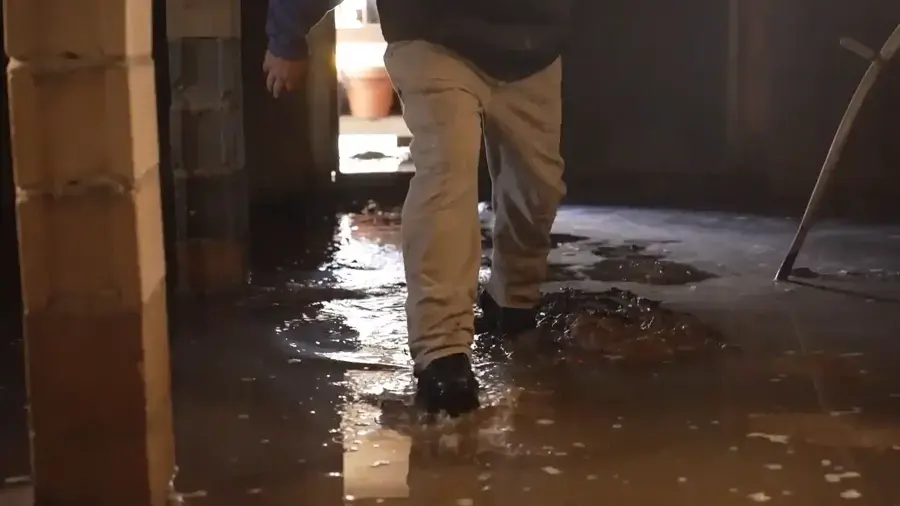
A flooded basement in Blue Ash can come from the sewer, a failed pump, a plumbing break or water that came in from outside, and the source decides who gets a report and how the cleanup is done.
First steps for basement flooding cleanup in Blue Ash
- 1
Stay out of the water
Hidden live outlets and contaminated water make a flooded basement unsafe until the hazard is cleared.
- 2
Find the source
Rain, a failed pump, a sewer backup and a broken pipe each lead to a different report and cleanup.
- 3
Report a backup
Sewage from a drain should be reported to MSD within 48 hours of discovery for its Sewer Back-Up program.
- 4
Document everything
Photos, dates and a damaged item list support the claim, so capture them before anything is thrown out.
What does basement flooding cleanup cost in Blue Ash, OH?
Unfinished basements usually cost $2,500 to $5,000. Finished spaces run $5,000 to $10,000 with clean water and up to $15,000 when the water was dirty and drywall has to come out.
Unfinished basement
- Pump out and extraction
- Slab and wall drying
- Daily readings
Finished, clean water
- Carpet pad removed
- Flood cuts where needed
- Dehumidifiers sized to space
Finished, dirty water
- Carpet and drywall removed
- Antimicrobial treatment
- Containment barriers
Four things move the final number most: the water category, the wet square footage, the material class and how soon drying began. The water damage cost calculator narrows the range for your own loss.
How basement flooding cleanup is handled in Blue Ash
Every job starts with a moisture map, so the equipment goes where the water actually went. The drying team keeps the machines running until meter readings match a dry reference, whatever the surface looks like.
- 1
Make it safe
Power and gas hazards are checked and the water is tested for contamination.
- 2
Pump and extract
Pumps drop the water level and tools lift what remains from the slab.
- 3
Remove and treat
Wet porous materials come out and surfaces are cleaned and disinfected.
- 4
Dry and verify
Dehumidifiers run until slab and wall readings match a dry reference.
Sorting out the source
Where the water came from changes the response. A sanitary backup is a sewage job and goes to MSD, which asks for the report within 48 hours of discovery and says overland flooding is not its responsibility. Rain related backups are looked at to see whether sewer capacity was the cause, so the date, the photos and the time of discovery matter.
- Take photos of the water and the floor before pumping
- Note the date and time the water was found
- Keep wet items until an adjuster has seen them
What happens in the basement
Pumps clear the standing water, extraction tools work the carpet and slab, and anything porous that sat in dirty water is bagged and removed. Walls are opened at the bottom where the drywall wicked water upward, and the cavities are dried behind it.
- Clean water often allows carpet to be cleaned and dried
- Sewage or dirty water means removal and disinfecting
Drying the slab and walls
Concrete holds water far longer than carpet, so dehumidifiers run well after the visible wet is gone. A finished basement takes longer than a bare one because trim, flooring and cabinets all hold water. Readings on the slab, the wall bottoms and the framing are logged each visit, and the equipment stays until those numbers match a dry reference. See structural drying for the method, and sump pump failure cleanup when a pump quit during the rain.
Basement flooding cleanup across Blue Ash and nearby towns
Basement flooding crews serve Blue Ash in ZIP code 45242, from Downtown Blue Ash and the Kenwood Road and Cooper Road corridors to buildings near Summit Park.
The same service nearby: basement flooding cleanup in West Chester, Montgomery, Sharonville.
Related water damage services in Blue Ash
Basement Flooding Cleanup questions in Blue Ash, OH
Is basement flooding a job for MSD?
MSD handles sanitary sewer backups. It says overland flooding is not its responsibility, so surface water entering from outside is a separate matter.
How soon should a backup be reported?
MSD asks that a sewer backup be reported within 48 hours of discovery to be considered for its Sewer Back-Up program, and it takes reports around the clock.
Can a flooded basement be saved without tearing out walls?
Often, if the water was clean and the drywall is only damp. Moisture mapping shows how high the water climbed, and cuts are kept to the wet portion.
What makes a basement dry out slowly?
Concrete slabs, carpet pad and wall framing all hold water. Dehumidifiers must pull that moisture out gradually, and rushing it can warp wood floors and trim.
Does a failed pump change the cleanup?
The cleanup is similar, but the cause matters for the claim. See sump pump failure cleanup for what to document.
Should children and pets stay out?
Yes. Dirty water carries bacteria, and wet floors hide hazards, so the basement should stay closed off until the cleanup and disinfecting are finished.
Pump out and dry a Blue Ash basement
Crews handle extraction, wet material removal, disinfecting and drying for flooded basements across Blue Ash and ZIP code 45242.
(888) 365-1450Blue Ash basement cleanup help