Structural Drying in Blue Ash
After the water is out, a Blue Ash building still holds moisture in framing, subfloors and wall cavities, so dehumidifiers and air movers are placed and readings logged until every material reaches its dry standard.
(888) 365-1450Get Blue Ash drying help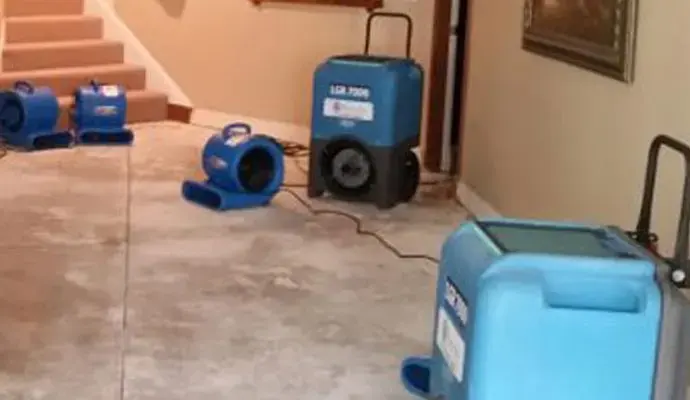
Drying is where most of the real work happens. Water that is visible is only part of it, and the rest sits inside materials where it can swell wood, loosen flooring and feed damage if it is left alone.
First steps for structural drying and dehumidification in Blue Ash
- 1
Keep equipment running
Leave dehumidifiers and air movers on, and keep doors and windows closed.
- 2
Hold a steady temperature
Warm air carries moisture better, so leave the heat at a normal level.
- 3
Watch the cords
Keep equipment cords and hoses clear of walkways and pets.
- 4
Expect a few days
Drying takes several days, and the readings, not the calendar, end it.
What does structural drying and dehumidification cost in Blue Ash, OH?
One room with Class one or two materials runs $1,000 to $2,500. A basement or several rooms costs $2,500 to $6,000, and Class four materials can reach $10,000.
One room, light materials
- Air movers
- One LGR dehumidifier
- Daily readings
Basement or several rooms
- Several dehumidifiers
- Wall cavity drying
- Psychrometric logs
Dense materials
- Desiccant dehumidifier
- Floor drying mats
- Longer drying time
Four things move the final number most: the water category, the wet square footage, the material class and how soon drying began. The water damage cost calculator narrows the range for your own loss.
How structural drying and dehumidification is handled in Blue Ash
Every job starts with a moisture map, so the equipment goes where the water actually went. The drying team keeps the machines running until meter readings match a dry reference, whatever the surface looks like.
- 1
Map the moisture
A meter and camera show how far water traveled through materials.
- 2
Set the equipment
Air movers and dehumidifiers go in by the size of the wet area.
- 3
Log the readings
Temperature, humidity and material readings are recorded each visit.
- 4
Release the space
Equipment comes out when every area reaches the dry standard.
How the equipment works
Wet materials release moisture into the air, and air movers speed that release across floors and walls. Low grain refrigerant dehumidifiers pull it back out of the air so it cannot settle on a cooler surface. Desiccant units are used when the air or the material is too cold or too dense for a standard unit. Placement follows the moisture map, not a fixed count.
- Air movers aimed along floors and low walls
- LGR dehumidifiers sized to the wet area
- Floor mats and cavity drying for trapped moisture
Readings decide the end
Moisture meters check the materials, and psychrometric readings track the temperature, humidity and grains of moisture in the air. The numbers are logged each visit, and equipment is moved or removed as areas reach the dry standard instead of being left in place by habit.
- Readings compared with a dry reference area
- Equipment pulled only after every area passes
Where drying fits
Drying follows extraction in almost every job, from a single room in water extraction to a flooded finished space in basement flooding cleanup. Class four materials such as concrete, plaster and hardwood dry slowly and need more time and a different dehumidifier. The same method applies whether the loss is in a home, a rental or an office.
Structural drying and dehumidification across Blue Ash and nearby towns
Structural drying runs in Blue Ash buildings in ZIP code 45242, from Downtown Blue Ash to the offices and homes near Glendale Milford Road and the Ronald Reagan Cross County Highway.
The same service nearby: structural drying and dehumidification in West Chester, Montgomery, Sharonville.
Related water damage services in Blue Ash
Structural Drying and Dehumidification questions in Blue Ash, OH
How long does structural drying take?
Most jobs take several days, but readings decide. Dense materials such as concrete or hardwood may need longer than drywall and carpet.
Why do the machines run constantly?
Air movers and dehumidifiers must run steadily so moisture keeps leaving the materials, and shutting them off lets it settle back in.
What do the daily readings show?
They show moisture in materials and temperature and humidity in the air, which tell the crew where to move equipment and when areas are dry.
Can a building dry without opening the walls?
Often yes. Small holes let air reach the cavity, and walls are opened only where materials are soft, stained or contaminated.
What does drying cost?
One room runs $1,000 to $2,500, a basement or several rooms $2,500 to $6,000, and dense materials up to $10,000.
Does mold grow while materials dry?
It can if materials stay wet, which is why drying is monitored and carried through to the dry standard.
Dry a Blue Ash building the right way
Crews set air movers and dehumidifiers, log readings each visit and keep equipment on site until materials reach the dry standard in ZIP code 45242.
(888) 365-1450Blue Ash structural drying help